- Key 2026 filing deadlines for small businesses
- 2026 estimated tax payment dates
- How extensions work in 2026 (and what they don’t do)
If you run a small business, the 2026 tax filing season is already on your calendar—even if you have not written the dates down yet. Missing a deadline can mean penalties, interest, and extra stress on top of everything else you manage as an owner.
This playbook gives you the key 2026 IRS dates for small businesses, explains how extensions really work, and shows you how to turn the tax calendar into a simple, repeatable system.
Key 2026 filing deadlines for small businesses
Exact dates can shift slightly when weekends or holidays are involved, but here are the core 2026 targets most small businesses need to know.
- Mid– to late January 2026: IRS opens e‑filing for 2025 returns.
- January 15, 2026: Final 2025 estimated tax payment due (Q4 2025).
- January 31 / early February 2026: Deadline to furnish most W‑2s and common 1099 forms to workers (exact date depends on weekend/holiday shifts).
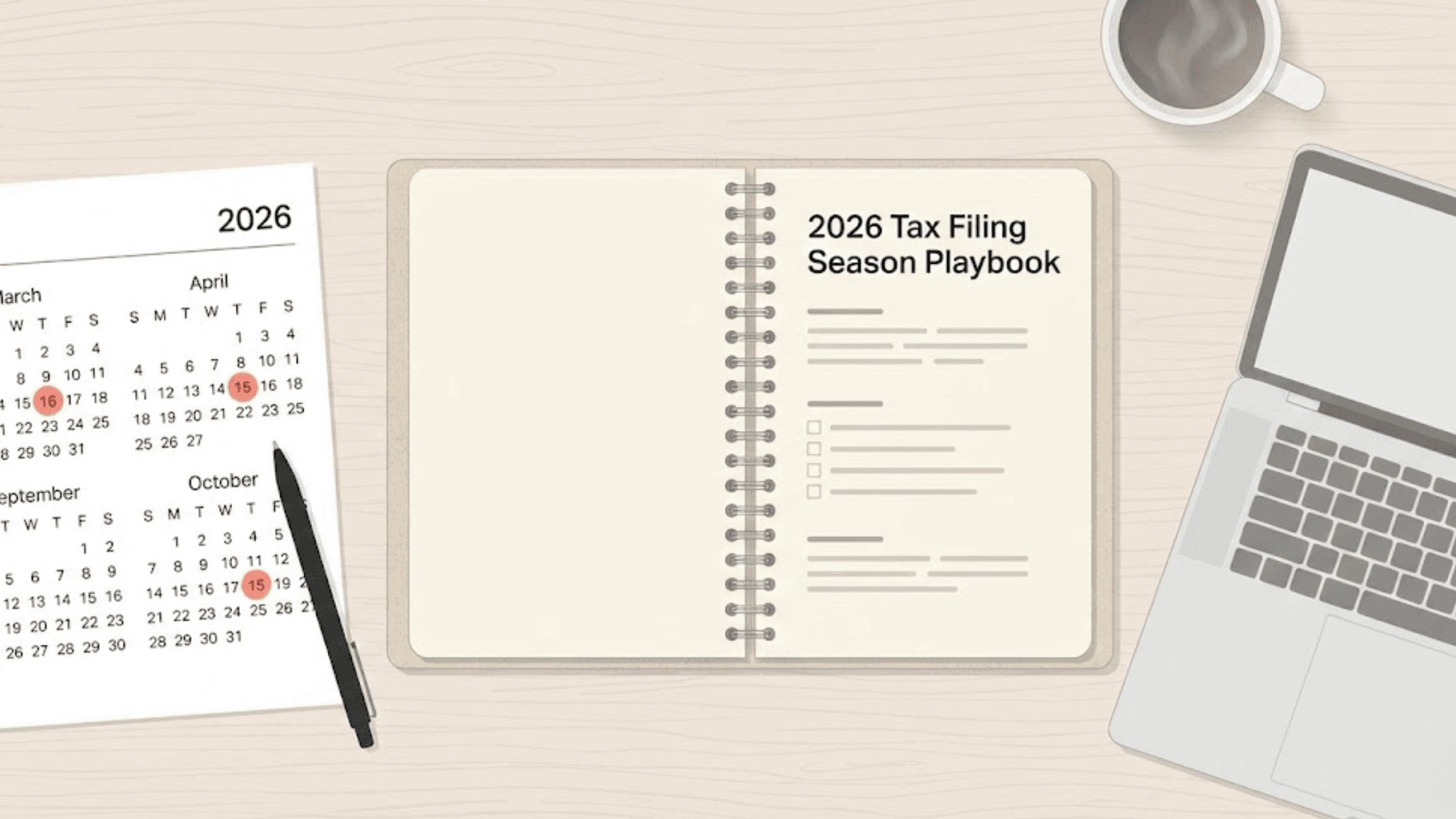
- March 16, 2026: Partnership and S‑corp returns due (Forms 1065 and 1120‑S) for calendar‑year businesses, since March 15 falls on a Sunday.
- April 15, 2026: Individual and C‑corp returns due (Forms 1040 and 1120) and first 2026 estimated tax payment.
If your business uses a fiscal year instead of a calendar year, your due dates key off your year‑end, but the same patterns and extension rules apply.
2026 estimated tax payment dates
Many owners owe estimated taxes because their income is not fully covered by payroll withholding. For 2026, the standard quarterly pattern applies:
- April 15, 2026: Q1 2026 estimated payment due.
- June 15, 2026: Q2 2026 estimated payment due.
- September 15, 2026: Q3 2026 estimated payment due.
- January 15, 2027: Q4 2026 estimated payment due.
Consistently underpaying estimates can trigger underpayment penalties, so it helps to pair your quarterly payments with up‑to‑date bookkeeping and realistic profit projections.
How extensions work in 2026 (and what they don’t do)
An extension gives you more time to file, not more time to pay. If you expect to owe tax, you still need to pay a good‑faith estimate by the original due date to avoid interest and potential penalties.
Typical 2026 extension outcomes for calendar‑year businesses:
- Partnerships and S‑corps: File Form 7004 by March 16, 2026, to extend to September 15, 2026.
- C‑corps: File Form 7004 by April 15, 2026, to extend to October 15, 2026.
- Sole proprietors and single‑member LLCs: File Form 4868 by April 15, 2026, to extend to October 15, 2026.
Extensions are a powerful tool if you use them intentionally—especially when you are waiting on K‑1s, complex information returns, or late‑arriving statements.
A simple system to stay ahead of 2026 tax deadlines
Instead of relying on memory, build a lightweight system around these dates. For example:
- Add each deadline to your calendar with reminders 30, 14, and 7 days in advance.
- Set a recurring monthly block for bookkeeping so your numbers are ready when your tax pro asks.
- Decide early whether you’re likely to file on time or extend, and plan cash flow around that decision.
If you handle payroll or issue 1099s, layer those tasks into your January and early‑February workflows so they do not compete with March and April income‑tax filings.
When to bring in professional help
You can’t delegate responsibility for your tax deadlines, but you can delegate most of the work. Consider getting help if:
- You operate through multiple entities (for example, an S‑corp plus a partnership or rental LLC).
- Your income fluctuates and you are never sure how much to pay in estimates.
- You are consistently filing extensions at the last minute or dealing with penalties.
A good tax advisor or fractional CFO can help you turn the 2026 tax calendar into a predictable, mostly automated rhythm rather than a scramble.

About the Author
Jason Astwood, Fractional CFO & Tax Strategist
As an IRS Enrolled Agent* and Financial Services Certified Professional®, Jason is a trusted authority in taxation, financial strategy, and business growth. He is the author of The S-Corp Playbook and the Director of Union National Tax, bringing over two decades of expertise in proactive tax planning, financial management, and compliance. Jason specializes in helping business owners minimize tax liability, optimize cash flow, and build long-term financial success. His combined expertise as a tax strategist, financial advisor, and Fractional CFO empowers entrepreneurs to scale their businesses with confidence.