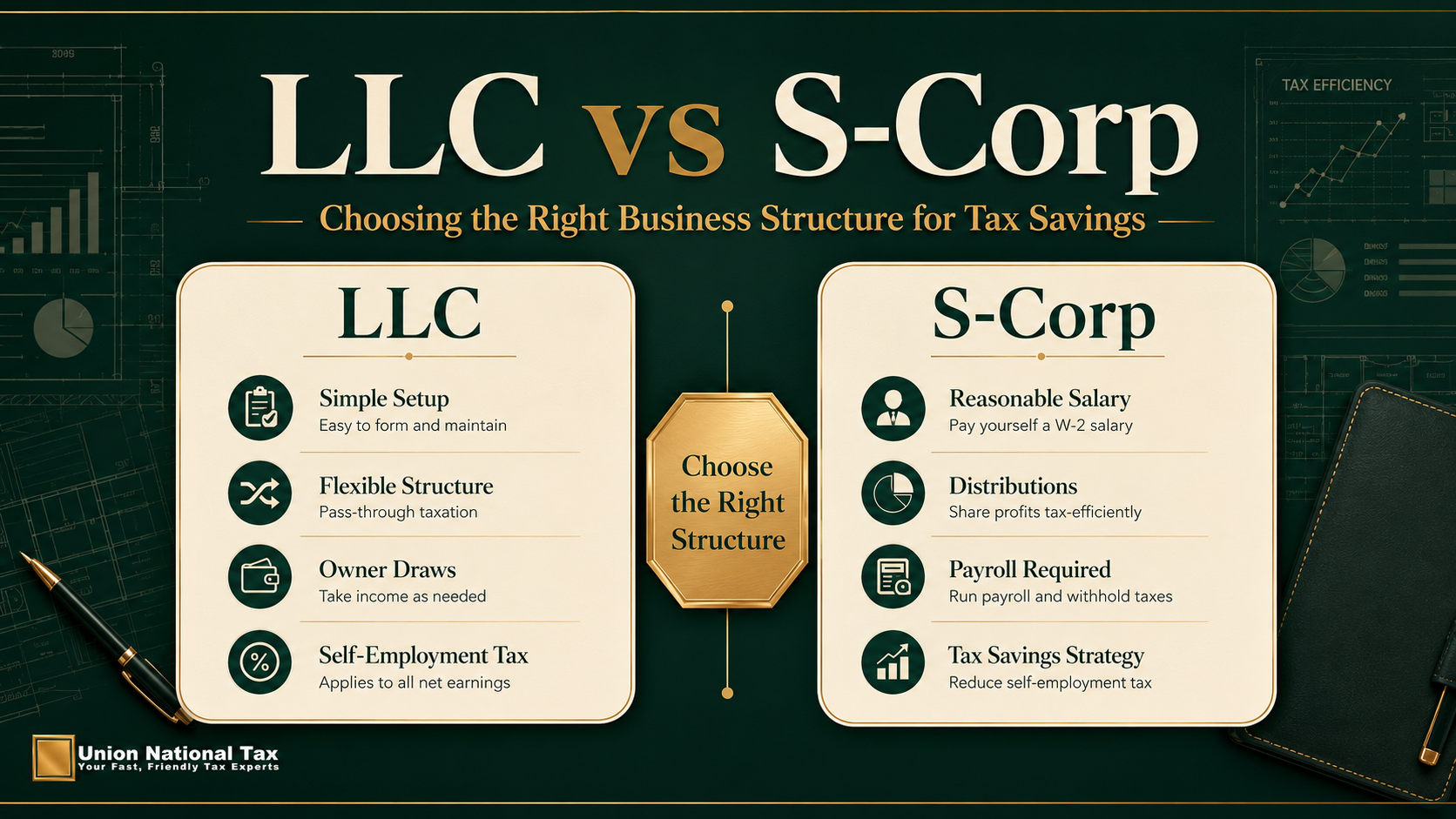
Choosing el correcto estructura del negocio es one de el la mayoríun importante financial decisions tú'll hacer as un dueño del negocio. Ambos LLCs y S-Corps offer liability protection, pero ellos differ dramatically en cómo ellos're taxed. Understanding el nuances puede mean el difference entre keeping más de qué tú earn y pagando de más el IRS.
Let's start con el defaults. Un LLC con un single member es taxed as un sole proprietorship por default. Todos ganancias y losses flow directly un tu personal declaración de impuestos, y tú're subject un impuesto de trabajo por cuenta propia en el entire ganancia neta. Un multi-member LLC es taxed as un sociedad por default, con similar traspaso imposición fiscal pero con el added complexity de sociedad returns.
Un Elección S-Corp changes esto dynamic. Cuándo tú archivar Formulario 2553 un elect S-Corp status, tu LLC (o corporación) becomes un traspaso entidad para impuesto sobre la renta purposes—pero con un crucial twist. Tú must pay ti mismo un reasonable salario, cuál es subject un nómina impuestos. Any additional ganancias puede be taken as distribuciones, cuál son No subject un nómina impuestos.
Esto es dónde el significant impuesto ahorro venir en. Let's compare el two structures con un concrete ejemplo.
Imagine tú ejecutar un consulting negocio con $250,000 en ganancia neta. As un LLC de un solo miembro (sole proprietorship), tú'd pay impuesto de trabajo por cuenta propia de 15.3% en el entire $250,000—que's $38,250. Add tu impuesto sobre la renta, y tu total carga fiscal es substantial.
As un S-Corp, tú pay ti mismo un reasonable salario de $100,000, cuál es subject un nómina impuestos de $15,300. El remaining $150,000 flows un tú as distribuciones, free de nómina impuestos. Tú've solo saved $22,950 en impuesto de trabajo por cuenta propia alone.
